


How to Optimize for AI Search in 2026
Many marketers are now focusing on how to appear in AI-generated search results. While there is no guaranteed formula, there are several strategies that have consistently shown positive results.
1. Create Content Around Topics, Not Just Keywords
Traditional SEO often focused on individual keywords. Today, AI systems evaluate how well a website covers an entire topic.
For example, if you want to rank for “Accounts Payable Automation,” you should also cover related topics such as:
- Invoice Processing
- OCR Technology
- Accounts Payable Best Practices
- ERP Integration
- Supplier Management
The more comprehensive your coverage, the stronger your topical authority becomes.
2. Structure Content for Easy Understanding
AI systems prefer content that is easy to interpret and extract information from.
I’ve found success by:
- Using descriptive headings
- Adding FAQ sections
- Writing concise answer-focused paragraphs
- Including bullet points where appropriate
- Breaking down complex concepts into simple explanations
Good content structure helps both users and search engines understand your content better.
3. Use Schema Markup
Schema markup helps search engines understand the context of your content.
Whether it’s FAQ Schema, Article Schema, or Organization Schema, structured data provides additional signals that improve content understanding and visibility.
While schema alone won’t guarantee rankings, it helps strengthen the overall SEO foundation.
4. Build Trust Through Citations
One trend I’ve noticed in AI-generated results is the importance of credibility.
When discussing statistics, industry trends, or market insights, referencing trusted sources adds authority to your content.
Rather than making unsupported claims, use data from reputable industry reports, research publications, and trusted organizations whenever possible.
5. Focus on Experience and Original Insights
The internet is becoming flooded with AI-generated content.
As a result, original insights are becoming more valuable.
Search engines and users are increasingly looking for content created by people with real-world experience.
Sharing lessons learned, case studies, practical examples, and personal observations can help your content stand out from generic articles.
What Hasn’t Changed in SEO
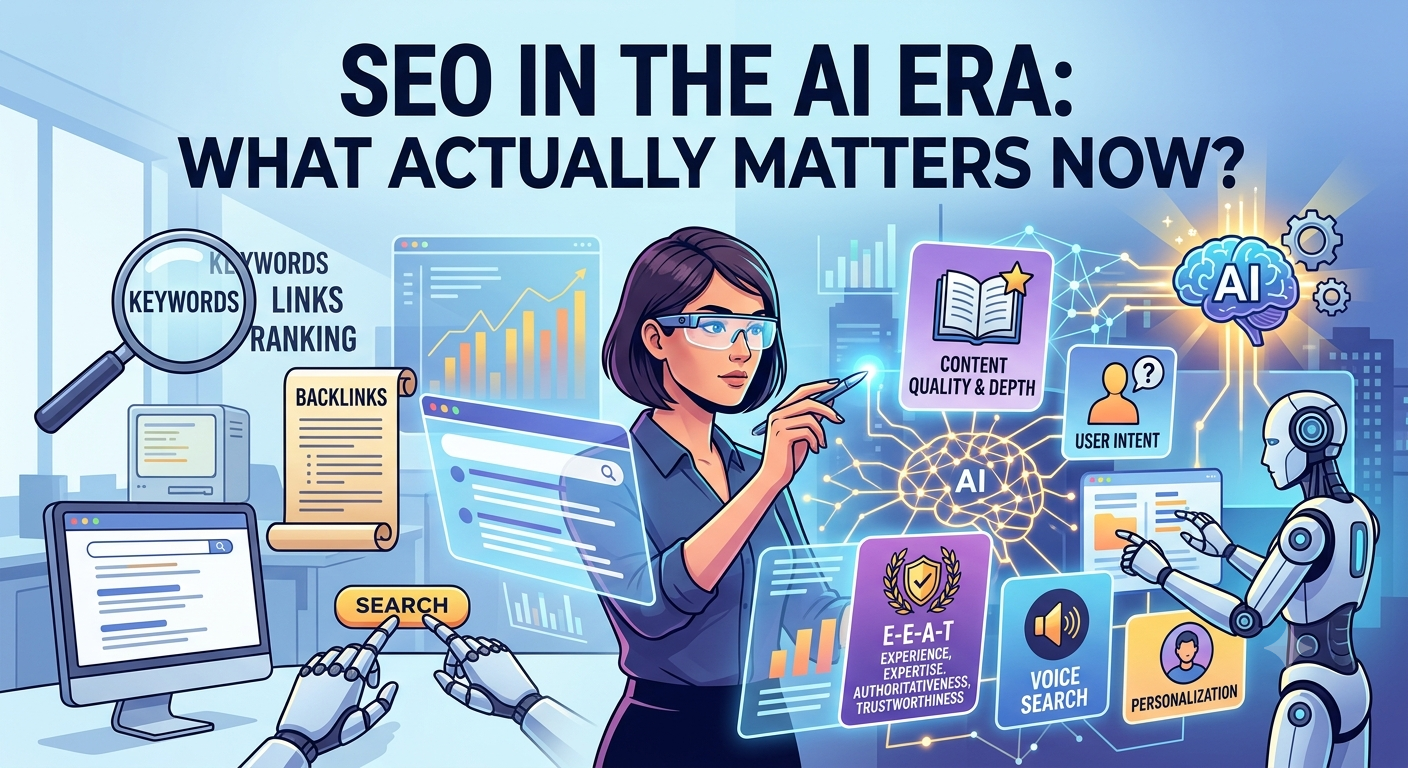
Despite all the discussion around AI, the fundamentals still matter.
Websites that perform well continue to focus on:
- Technical SEO
- Quality content
- Internal linking
- User experience
- Backlinks
- Topical authority
AI has not replaced these fundamentals. Instead, it has increased the importance of getting them right.
Final Thoughts
The future of SEO isn’t about choosing between traditional SEO and AI optimization.
The future belongs to marketers who understand both.
Search engines are becoming more intelligent, user expectations are evolving, and AI-generated experiences will continue to grow. However, the core objective remains the same: provide the most helpful, trustworthy, and relevant information to users.
The websites that succeed over the next few years will not be the ones chasing every algorithm update. They will be the ones building authority, creating genuinely useful content, and adapting their strategies as search evolves.
SEO is not dying.
It’s simply entering its next phase—and those who embrace AI while staying focused on strong SEO fundamentals will be in the best position to win.
Check Out more blogs